Links below are affiliate links. We earn a commission on purchases at no extra cost to you.
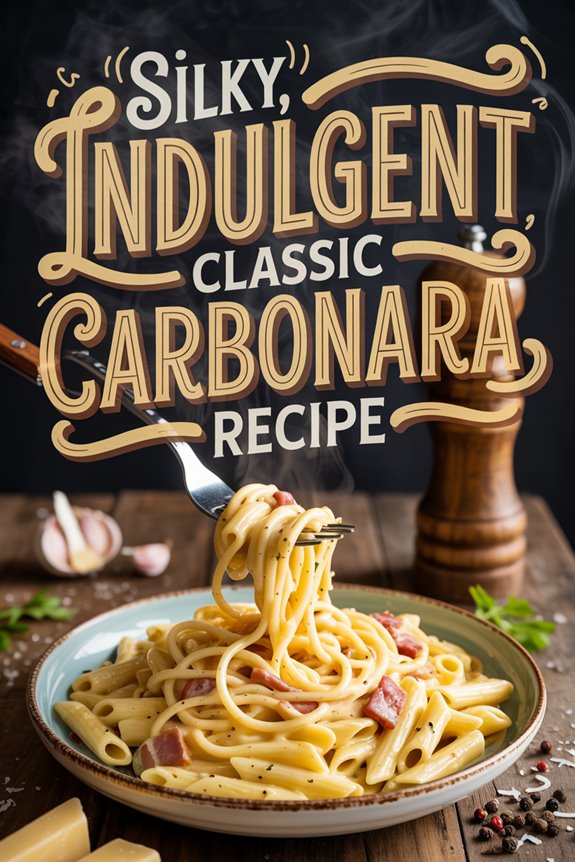
Silky, Indulgent Classic Carbonara Recipe
From creamy eggs to crispy bacon, this indulgent carbonara transforms simple ingredients into a restaurant-worthy pasta dish that will leave you craving more.
Why You’ll Love this Classic Carbonara
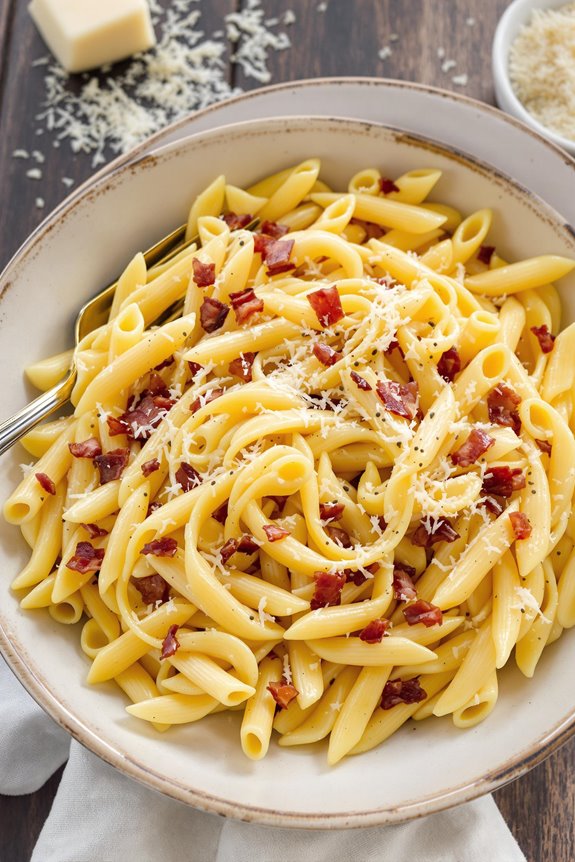
When you’re craving comfort food that delivers maximum flavor with minimal effort, this classic carbonara recipe absolutely hits the spot. The silky sauce, created from the magical combination of eggs, cheese, and that splash of evaporated milk, wraps around each piece of penne like a warm hug. I’m obsessed with how the paprika adds just the right hint of complexity without overwhelming the dish’s traditional flavors.
You may be interested
Fiery Cajun Pasta Recipe: Louisiana Soul Food
July 7, 2026
Irresistible Homemade Chicken Gnocchi Recipe
June 19, 2026
There’s something deeply satisfying about watching those simple ingredients transform into something so luxurious – and in just minutes! Trust me, once you master this technique, you’ll find yourself reaching for this recipe whenever you need a quick, impressive dinner.
What Ingredients are in Classic Carbonara?
Traditional carbonara relies on a handful of simple ingredients that, when combined properly, create that signature creamy, indulgent sauce we all crave. This version uses penne pasta instead of the traditional spaghetti, which actually makes it easier to eat (no awkward twirling!) and gives the sauce more nooks and crannies to cling to.
The combination of eggs, cheese, and that little secret ingredient—evaporated milk—creates a silky texture that’s absolutely irresistible.
- 500g penne pasta
- 1/3 cup evaporated milk
- 1 teaspoon paprika
- 1 egg yolk, lightly beaten
- 2 eggs, lightly beaten
- 1/3 cup grated parmesan cheese, approximately
- 4 slices bacon, cut into 3cm strips
- Cooking oil (for the bacon)
- Salt (for the pasta water)
When shopping for these ingredients, quality really matters for carbonara. Try to find the freshest eggs possible, as they’re the star of the show.
And while pre-grated parmesan is convenient, freshly grated will melt much more smoothly into your sauce. As for the bacon, you can certainly substitute pancetta or guanciale for a more authentic touch, though regular bacon works perfectly in this family-friendly version.
How to Make this Classic Carbonara
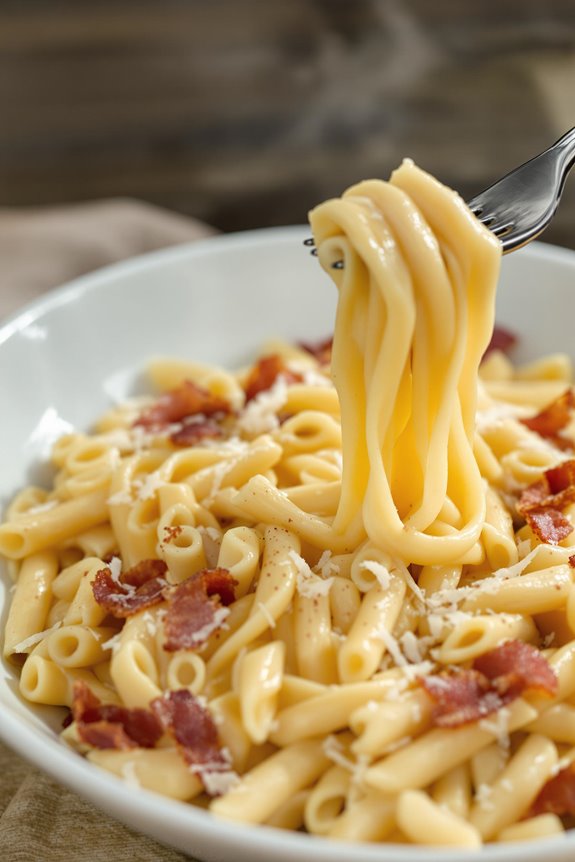
Let’s begin by cooking 500 g of penne pasta in a large pot of boiling, salted water according to the package directions.
While that’s bubbling away, we’ll prep our sauce components. In one small bowl, combine 1/3 cup of evaporated milk with 1 teaspoon of paprika and set it aside. In another bowl, lightly beat 2 whole eggs and 1 egg yolk, then mix in about 1/3 cup of grated parmesan cheese to create that creamy base that makes carbonara so irresistible.
Once the pasta is perfectly al dente, drain it and keep it warm while you cook 4 slices of bacon (cut into 3cm strips) in the same pot you used for the pasta—fewer dishes, more flavor, right?
After the bacon is cooked to your liking, remove the pot from the heat and pour in that milk and paprika mixture, stirring well to combine.
Now comes the magic moment: add the warm pasta back to the pot along with the egg and cheese mixture. The residual heat will gently cook the eggs without scrambling them, creating that signature silky carbonara sauce that coats every piece of pasta.
For the ultimate carbonara experience, consider using a high-end Dutch oven which provides superior heat retention and distribution for perfectly cooked pasta dishes.
Stir quickly and thoroughly until everything is well combined, and serve immediately—carbonara waits for no one!
Recommended Products

IDEAL FOR FAMILY MEALS - Perfectly sized for families of 3–5 people, this 5.5QT Dutch oven handles everything from hearty soups and stews to one-pot dinners, pasta dishes, and Sunday pot roasts. Spacious enough for a whole chicken yet practical for everyday cooking, it delivers the ideal balance between daily family meals and weekend entertaining. Also well-sized for artisan bread bakers who want one pot for both family dinners and sourdough baking.

Even Heat Distribution Retention: This Umite Chef Dutch oven Made with heavy-duty enameled cast iron, ensures even heat distribution for perfect searing and slow cooking, locking in flavors. thickened walls lock in heat for slow braising, searing, and baking. Unlike thin pots that scorch food, this professional-grade Enameled cast iron potSuperior heat retention after preheating (allow 5-7 mins for even distribution). CRITICAL: Always cool naturally for 45+ mins before cleaning. Thermal shock (hot-to-cold contact) cracks enamel. USE TIP: Preheat 2-3 mins on medium-low only
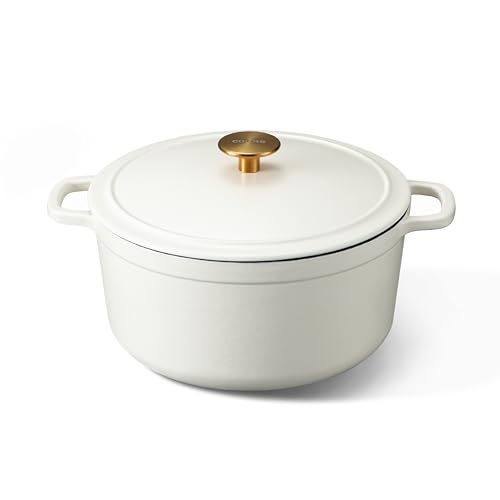
Superior Even Heat Control: One-piece thick cast iron delivers uniform heat with zero hot spots and excellent heat retention, ideal for searing, braising and crusty bread baking. Preheat on medium-low heat; cool naturally before washing to prevent enamel cracking.
Classic Carbonara Substitutions and Variations
While our classic carbonara recipe is absolutely delicious as written, the beauty of this Italian staple lies in its adaptability. I’m always amazed at how a few simple swaps can transform this dish while maintaining its comforting essence.
Try pancetta or guanciale instead of bacon for a more authentic flavor profile. Don’t have evaporated milk? Heavy cream works beautifully, creating an even silkier sauce. For a protein boost, add sautéed mushrooms or peas (though purists might gasp!). Switching to spaghetti or bucatini offers that traditional twirl-worthy experience, while pecorino romano can replace parmesan for a sharper, saltier bite.
Recommended Products

Natural Ingredients

One 8 oz. shaker bottle of Kraft Grated Parmesan & Romano Cheese

Imported from Italy
What to Serve with Classic Carbonara
A perfect carbonara deserves equally thoughtful accompaniments to round out your meal, creating a balanced dining experience that respects the dish’s rich character.
I recommend a crisp, peppery arugula salad with lemon vinaigrette—its brightness cuts through the pasta’s creaminess beautifully. A side of roasted asparagus or broccolini adds color and nutritional balance without overwhelming the star of the show.
For wine, you can’t go wrong with a dry, acidic white like Pinot Grigio or Vermentino.
If you’re feeling fancy, warm, crusty garlic bread makes an indulgent addition, perfect for sopping up any remaining sauce on your plate.
Recommended Products

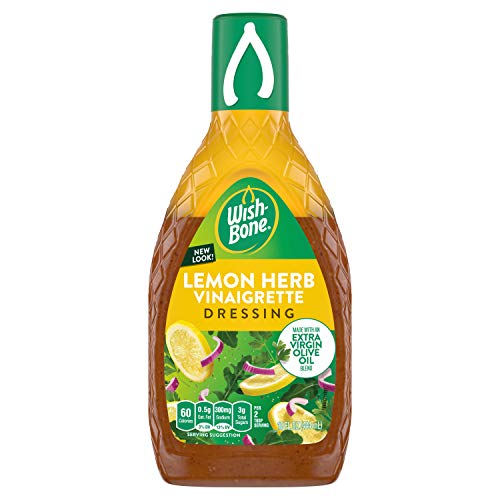
One 15 fl oz bottle of Wish-Bone Extra Virgin Olive Oil Blend Lemon Herb Dressing

Salad Dressings
Final Thoughts
Mastering the art of carbonara truly comes down to respecting its beautiful simplicity. This dish isn’t about elaborate techniques or rare ingredients, but rather about timing, temperature, and balance.
The magic happens in that moment when hot pasta meets egg, creating that silky sauce that coats each strand perfectly.
I’m convinced that carbonara represents Italian cuisine at its finest—letting a few quality ingredients shine without fuss or complication. The slight crunch of bacon, the richness of egg, the sharp bite of Parmesan—it’s comfort food elevated to art.
Isn’t it wonderful how something so straightforward can deliver such profound satisfaction?