Links below are affiliate links. We earn a commission on purchases at no extra cost to you.
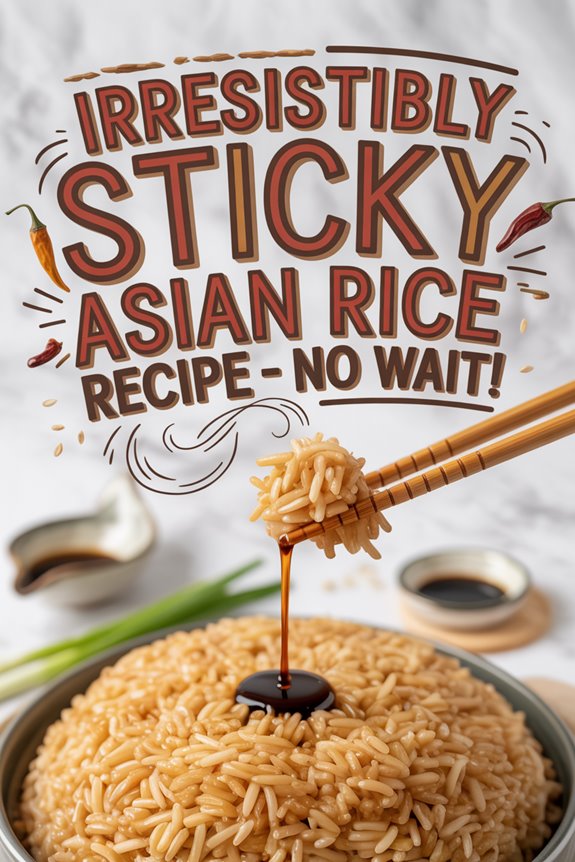
Irresistibly Sticky Asian Rice Recipe – No Wait!
Just when you thought sticky rice was complicated, this foolproof method delivers perfect results every time — without the usual wait!
Why You’ll Love this Perfect Asian Sticky Rice
I’m absolutely thrilled to share this foolproof sticky rice method that’ll transform your Asian cooking game forever.
You may be interested
Asian Beef & Broccoli Recipe
June 6, 2025
Ginger-Sesame Bok Choy Recipe: Sizzling Asian Comfort
September 18, 2025
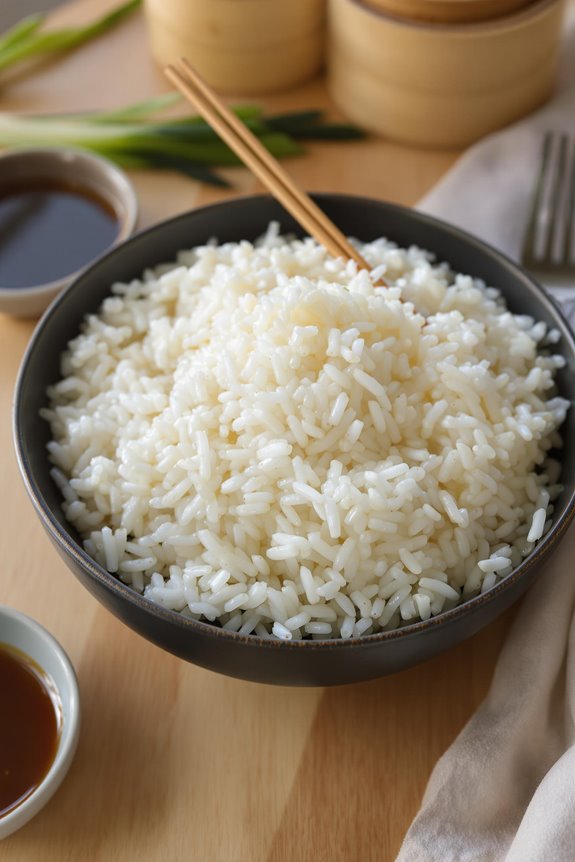
You’ll adore how these pearly grains cling together just enough to pick up with chopsticks, yet maintain their distinct texture with each bite.
The beauty lies in its simplicity—just 2 cups of short-grain Calrose rice, properly washed (but not over-washed, unless you’re aiming for that peculiar fishy flavor nobody wants!), and the perfect water level measured by your middle finger.
It’s science meets tradition, creating that authentic foundation for curries, stir-fries, and sushi that restaurant chefs master.
What Ingredients are in Perfect Asian Sticky Rice?
Making perfect sticky Asian rice doesn’t require a long shopping list or exotic ingredients you’ll never use again. In fact, the beauty of this staple lies in its simplicity—just rice and water, prepared with the right technique.
The magic happens when you select the proper grain and treat it with respect during preparation. I’m always amazed at how something so basic can transform into the foundation of countless delicious Asian dishes.
- 2 cups short-grain rice (Calrose type works best)
- Alternative: 2 cups medium-grain rice (Calrose type also works well)
- Water (amount determined by the first line of your middle finger method)
The rice selection matters tremendously for achieving that perfect sticky texture we’re after. While Calrose is specifically mentioned as the ideal variety, what you’re really looking for is short to medium grain rice with high starch content.
Those starches release during cooking, creating that wonderful stickiness that’s ideal for picking up with chopsticks or molding into sushi. Can you use long-grain rice instead? Technically yes, but the results won’t have that authentic clinging quality that makes sticky rice, well, sticky.
And remember the washing note—three times is the charm, but over-washing introduces an unpleasant fishy flavor that can ruin your entire dish.
How to Make this Perfect Asian Sticky Rice
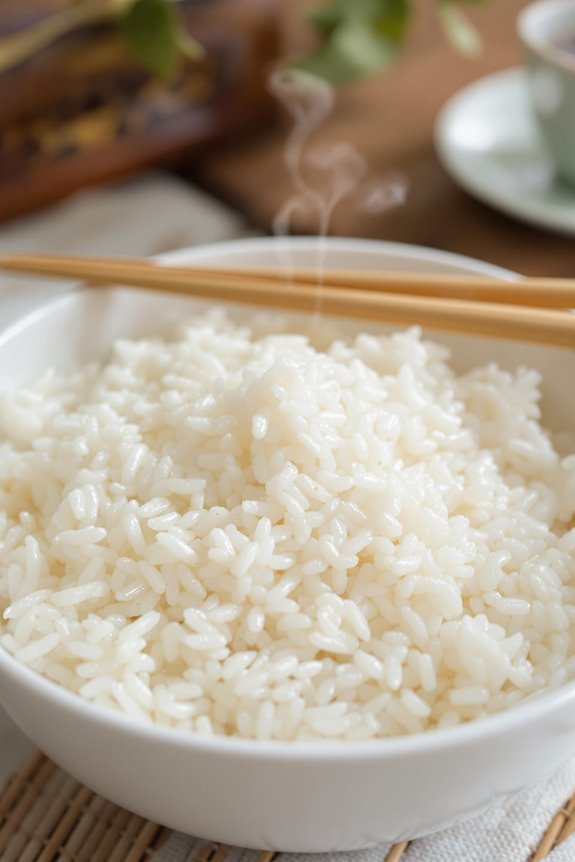
Making sticky rice isn’t just about throwing rice in water and hoping for the best. It starts with selecting the right grain—2 cups of short-grain or medium-grain rice, with Calrose variety being ideal for that perfect sticky texture we’re all after.
The washing process is absolutely essential. You’ll want to place your rice in the cooker and wash it three times, filling the pot with water and carefully draining until the rice nearly spills out. A gentle swish with your fingers helps remove excess starch without overdoing it.
Now comes the water measurement technique that grandmothers have passed down for generations. After washing, add water until it reaches the first line of your middle finger when you touch the surface of the rice. Sounds a bit mystical, doesn’t it? But trust me, this finger-measuring method works better than any measuring cup.
Then simply let your rice cooker do its magic until it automatically switches to warm. The beauty of modern technology, saving us from hovering anxiously over a pot.
One important tip that might save your dinner: resist the urge to over-wash the rice. While cleanliness is generally a virtue, washing rice too aggressively or too many times can actually impart an unpleasant fishy flavor. Three gentle washes is the sweet spot.
For an even more authentic preparation, consider using a high-end Dutch oven to achieve perfectly consistent heat distribution throughout the cooking process.
When done correctly, your sticky rice will have that perfect consistency—firm yet tender, with grains that cling together just enough to pick up with chopsticks but separate easily in your mouth. It’s the ideal canvas for soaking up sauces or standing deliciously on its own.
Recommended Products

Easy-to-use programmable digital controls complete with an automatic Keep Warm mode after each cycle

𝗘𝗳𝗳𝗼𝗿𝘁𝗹𝗲𝘀𝘀 𝗖𝗼𝗼𝗸𝗶𝗻𝗴: Master rice dishes effortlessly with our intuitive design, making cooking as easy as 1-2-3.

Compact Yet Mighty: This small rice cooker makes 2 cups of cooked rice from 1 cup uncooked; fluffy results for one, on a footprint small enough for any countertop
Perfect Asian Sticky Rice Substitutions and Variations
While traditional sticky rice calls for Calrose varieties, you’ll be thrilled to discover there’s plenty of room for delicious experimentation.
I’ve found that jasmine rice creates a wonderfully aromatic variation, though it’s slightly less sticky. For a nuttier profile, try substituting ¼ cup of black rice into your regular batch—the purple hue it creates is absolutely stunning against colorful toppings!
You can also enhance your rice with flavoring agents during cooking: add 1 tablespoon of coconut oil, a crushed lemongrass stalk, or 2-3 pandan leaves for authentic Southeast Asian notes that’ll transform your ordinary rice into something truly extraordinary.
Recommended Products

Six 8.5 oz pouches of BEN'S ORIGINAL Ready Rice Jasmine Rice

365 by Whole Foods Market products give you that dance-down-the-aisles feeling, virtual aisles too!

Product Type:Grocery
What to Serve with Perfect Asian Sticky Rice
Where would delicious sticky rice be without equally tempting accompaniments?
I’m passionate about pairing this versatile staple with dishes that complement its subtle sweetness and satisfying chew.
Try serving it alongside a fragrant Thai green curry, where the rice enthusiastically soaks up every drop of coconut-infused sauce, or with crispy Chinese salt and pepper tofu that provides textural contrast to the tender grains.
For simpler meals, I suggest wrapping sticky rice with grilled fish in banana leaves, or enjoying it with caramelized pork belly glazed in fish sauce and brown sugar.
The possibilities are endless—sweet mango with coconut sticky rice might just change your life!
Recommended Products

Versatile Thai flavoring paste; flavorful blend of lemongrass, spice (including galangal) and fresh green chili
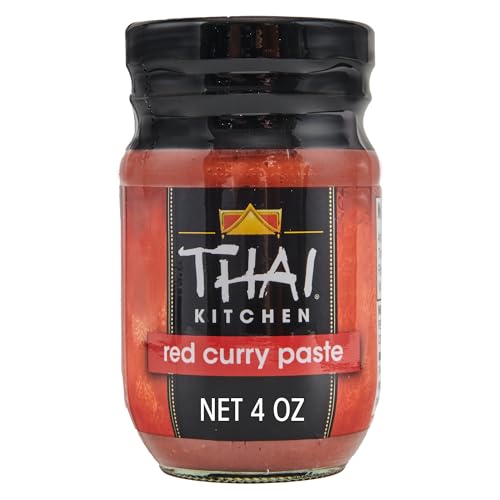
MADE FOR HOME COOKS: Bring Thai-inspired flavor to your table with red curry paste made with ingredients including red chili pepper, garlic, lemongrass, salt, shallot, coriander root, and makrut lime peel
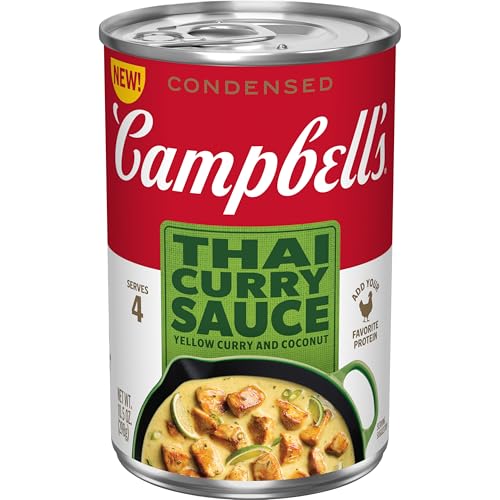
Campbell's Condensed Sauces, new from America's favorite soup maker, make dinner easy when you add your favorite protein
Final Thoughts
After you’ve mastered this sticky rice recipe, you’ll never want to return to ordinary rice again!
There’s something magical about that perfectly sticky texture that clings to your chopsticks and soaks up sauces like a culinary sponge.
I’m convinced the secret lies in those three gentle washes—never more, unless you’re aiming for that peculiar fishy flavor nobody wants!