Links below are affiliate links. We earn a commission on purchases at no extra cost to you.
Silky Morning Classic: Dreamiest Scrambled Eggs Recipe
Gentle heat transforms ordinary eggs into cloud-like curds that will forever change how you approach breakfast.
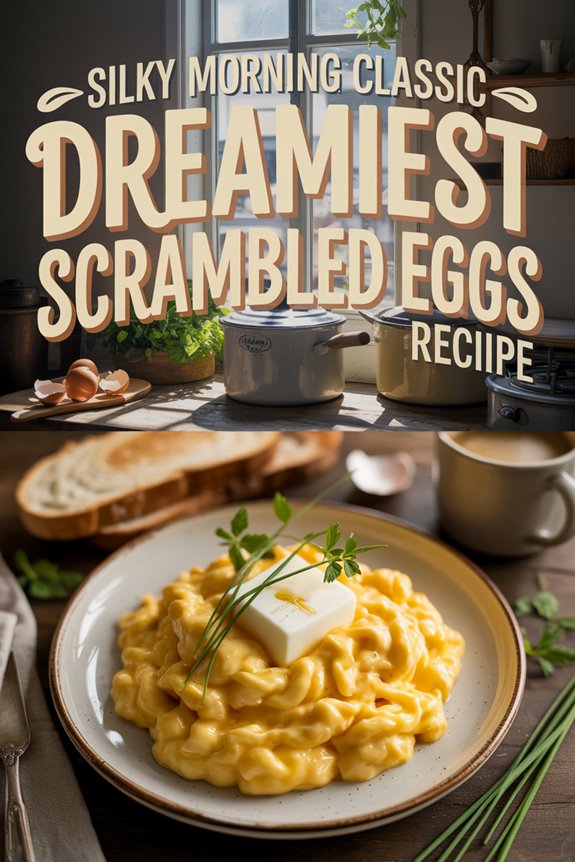
Why You’ll Love these Silky-Smooth Scrambled Eggs
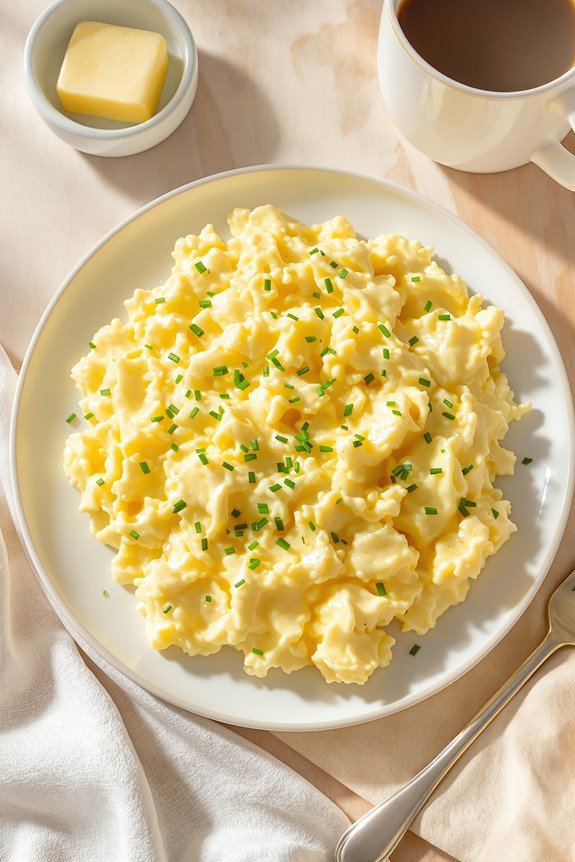
While many scrambled egg recipes leave you with dry, rubbery curds, these dreamy eggs will revolutionize your breakfast game forever. I’m talking about silky, tender curds that melt in your mouth—not those sad, overcooked lumps we’ve all suffered through.
What makes these eggs exceptional is the gentle, indirect heat method using a double boiler setup. The slow cooking process, combined with just a tablespoon of heavy cream, creates that luxurious texture you’d expect at high-end brunch spots. Plus, the technique of lifting rather than stirring preserves those beautiful, pillowy curds. Trust me, your morning toast has been waiting for this upgrade.
What Ingredients are in Silky-Smooth Scrambled Eggs?
These dreamiest scrambled eggs are all about quality ingredients combined with gentle cooking. The secret to their silky texture isn’t complicated—it’s the balance of rich fats and proteins, cooked slowly to perfection.
With just a handful of simple ingredients, you can transform ordinary eggs into something truly special for your breakfast table. And the best part? You probably have most of these items in your kitchen already.
- 3 large eggs
- 1 tablespoon heavy cream
- 1/4 teaspoon kosher salt
- 1/2 tablespoon butter
- 1 tablespoon snipped fresh herbs of choice (chives, chervil, parsley, or tarragon)
While the ingredient list is simple, the quality matters tremendously. Farm-fresh eggs with those vibrant orange yolks will elevate these scrambled eggs even further.
And don’t be tempted to substitute the heavy cream with milk—that small amount of fat is what gives these eggs their luxurious mouthfeel. As for the herbs, they’re technically optional, but that fresh pop of color and flavor creates the perfect finishing touch.

Fresh herbs add a brightness that dried just can’t match, so it’s worth picking some up if you don’t have any growing in your kitchen garden.
How to Make these Silky-Smooth Scrambled Eggs
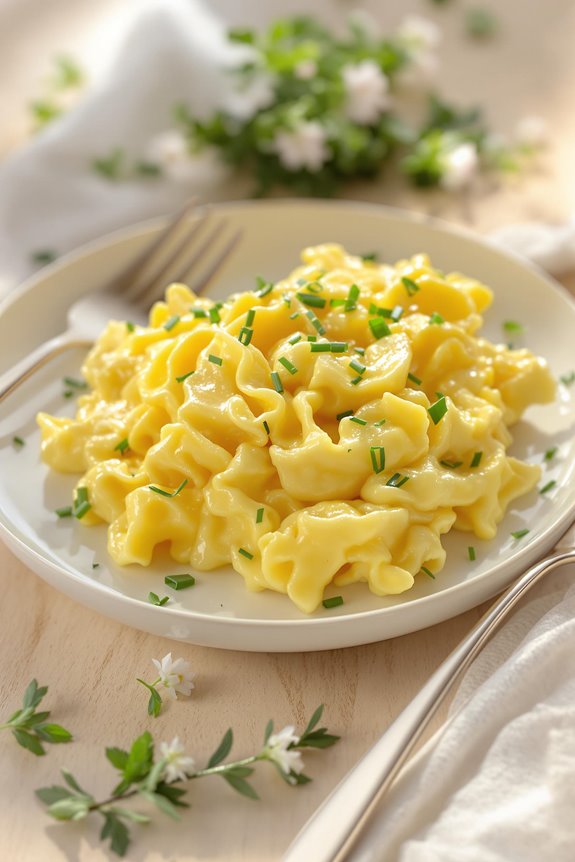
The secret to achieving these dreamy scrambled eggs lies in gentle, patient cooking. Start by heating 1-2 inches of water in a heavy saucepan or double boiler until just simmering—not boiling, we’re aiming for gentle heat here.
While your water heats, whisk together 3 large eggs, 1 tablespoon of heavy cream, and 1/4 teaspoon of kosher salt in a small mixing bowl. Use a fork for this job and whisk until everything is fairly homogenized. The whites will start to break up, but don’t go overboard—we’re making scrambled eggs, not whipped cream.
Next, place a stainless mixing bowl or the top of your double boiler over the simmering water and add 1/2 tablespoon of butter, swirling as it melts. When the butter has completely melted, pour in your egg mixture. You shouldn’t see instant cooking action around the edges—if you do, your heat is way too high and you’ll end up with tough eggs instead of silky ones.
Patience is key here. As the eggs begin to cook, you’ll notice curds forming from the bottom. Using a spoon or spatula, gently lift these curds to the top, allowing the uncooked egg to flow beneath. This isn’t a stir-fry situation; think of it more as a gentle lifting and folding motion.
When the eggs are almost set but still look a bit wet, remove them from the heat. They’ll continue cooking slightly from residual heat, giving you that perfect, creamy texture. If smaller curds are more your style, you can chop the eggs a bit and stir lightly at this point.
For even more culinary precision, a high end food processor can help achieve perfectly minced herbs for garnishing your gourmet breakfast creation.
The final touch? Sprinkle 1 tablespoon of snipped fresh herbs of your choice—chives, chervil, parsley, or tarragon all work beautifully. These herbs not only add a pop of color but also bring a fresh flavor that complements the richness of these dreamiest scrambled eggs.
And voilà, breakfast perfection on a plate.
Silky-Smooth Scrambled Eggs Substitutions and Variations
Should you find yourself without one of the key ingredients for these silky-smooth scrambled eggs, don’t worry—I’ve got you covered with plenty of delicious alternatives.
No heavy cream? Substitute milk, half-and-half, or even a dollop of sour cream. Dairy-free folks can use coconut cream for a subtle tropical note.
Replace butter with olive oil or ghee for different flavor profiles.
As for herbs, the world’s your oyster! Try dill for brightness, thyme for earthiness, or cilantro for zing.
You can also fold in grated cheese, sautéed mushrooms, or caramelized onions just before the eggs finish setting. Trust your palate!
What to Serve with Silky-Smooth Scrambled Eggs
Now that you’ve mastered these dreamy eggs, let’s talk about their perfect companions.
I love pairing them with crispy toast points—sourdough or rye adds a tangy contrast that cuts through the richness.
Avocado slices, lightly salted and drizzled with olive oil, provide a buttery complement to those delicate curds.
For a more substantial meal, consider roasted tomatoes (10 minutes at 400°F with a sprinkle of thyme) or sautéed mushrooms with a hint of garlic.
A side of crispy bacon or fresh fruit creates that sweet-savory balance that makes breakfast truly memorable.
Final Thoughts
Mastering scrambled eggs, though seemingly simple, represents one of cooking’s most rewarding achievements—a true culinary milestone worth celebrating.
There’s something magical about watching those humble eggs transform into cloud-like curds under your watchful eye. Remember, patience truly is the virtue here—keeping that heat gentle, lifting rather than stirring, and removing them just before you think they’re done.
I’m convinced that perfect scrambled eggs aren’t just breakfast; they’re a statement of care, a small luxury we can all afford ourselves.
Next time you’re wielding your spatula over a pan of slowly setting eggs, pause to appreciate the delicious simplicity before you.