Links below are affiliate links. We earn a commission on purchases at no extra cost to you.
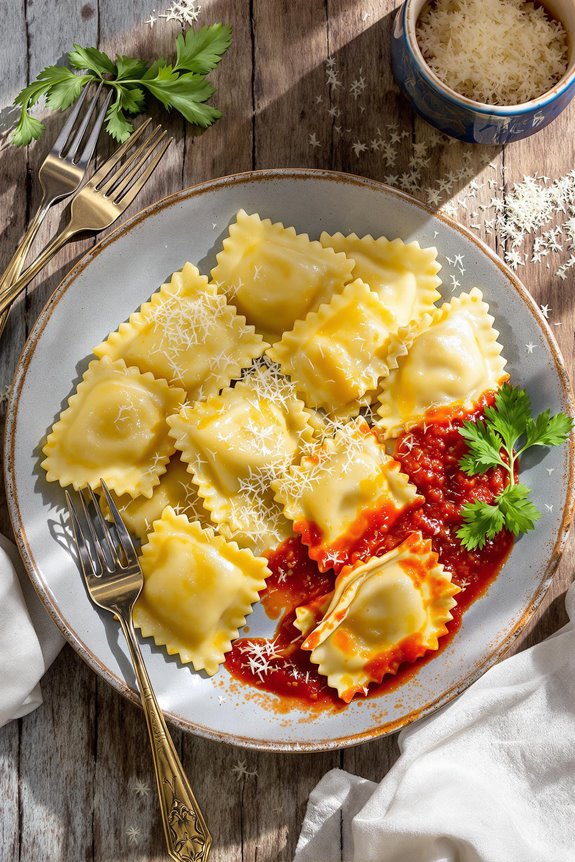
Nonna’s Italian Cheese Ravioli Recipe
Uncover the secrets to Nonna's authentic Italian cheese ravioli that will transport your taste buds straight to the hills of Tuscany.
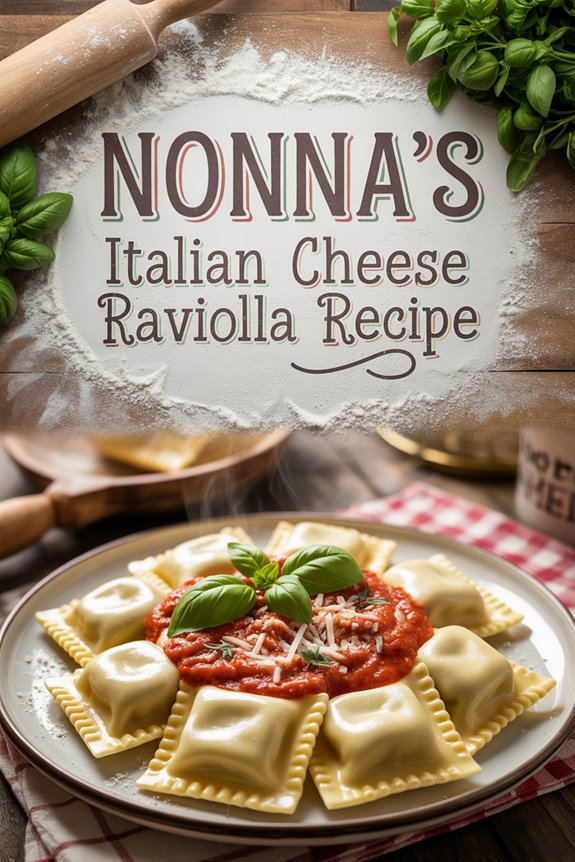
Why You’ll Love these Homemade Italian Ravioli
Magic happens when you bite into perfectly handcrafted ravioli, with its tender pasta exterior giving way to a luscious cheese filling that’s simply impossible to replicate with store-bought versions.
I’m telling you, there’s something deeply satisfying about transforming simple ingredients—flour, eggs, olive oil—into little pillows of pasta perfection.
The combination of three cheeses creates a filling that’s both creamy and complex, while the homemade pasta achieves that ideal al dente texture you’ll never find in packaged varieties.
Plus, you’ll feel like a true Italian chef as you pipe the filling onto your hand-rolled dough!
What Ingredients are in Homemade Italian Ravioli?
To create these delectable little pillows of pasta perfection, you’ll need simple, quality ingredients that transform into something magical when combined. The beauty of homemade ravioli lies in its straightforward components—nothing complicated or mysterious, just good, honest ingredients that Italian grandmothers have been using for generations.
And trust me, once you gather everything together, you’ll be surprised at how accessible this seemingly fancy dish really is.

For the pasta dough:
- 3¾ cups flour
- 5 eggs
- 3 tablespoons olive oil
- 1 pinch salt
For the cheese filling:
- 2 cups fat-free ricotta cheese
- 1 cup part-skim mozzarella cheese
- 3 eggs
- ½ cup lowfat Parmesan cheese
- ¼ cup parsley
When shopping for these ingredients, quality matters, especially for the cheeses. The ricotta should be as fresh as possible—it forms the base of your filling and really carries the flavor.
While this recipe uses fat-free and part-skim options to keep things lighter, you could certainly use full-fat versions for an even richer result. And don’t skimp on the Parmesan; a good, authentic Parmigiano-Reggiano will elevate your ravioli from good to absolutely memorable.
The eggs serve double duty here, binding both the pasta dough and the filling, so farm-fresh eggs with vibrant yolks will give you the best color and flavor.
How to Make these Homemade Italian Ravioli
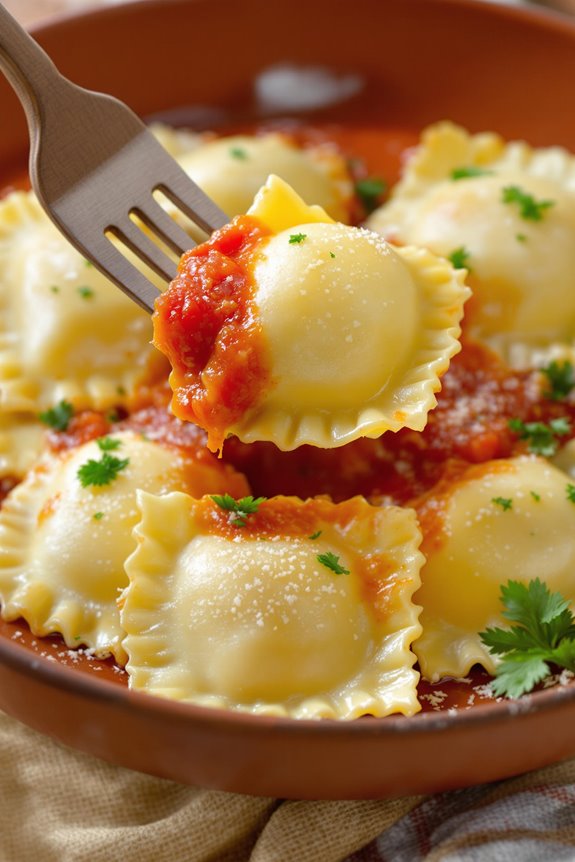
Making homemade ravioli starts with a simple but delicious dough. Combine 3¾ cups flour, 5 eggs, 3 tablespoons olive oil, and 1 pinch of salt, then mix everything together for a good 10 to 15 minutes until you get a smooth, elastic dough. This mixing time might seem long (my arms would certainly think so!), but it’s essential for developing the gluten that gives your pasta that perfect texture.
Let the dough rest for an hour under a clean kitchen towel—this relaxation period is non-negotiable, as it allows the gluten to relax and makes rolling much easier.

While your dough is resting, prepare that creamy filling by combining 2 cups fat-free ricotta cheese, 1 cup part-skim mozzarella cheese, 3 eggs, ½ cup lowfat parmesan cheese, and ¼ cup parsley. The combination of these three cheeses creates the perfect balance of creaminess and flavor that makes Italian ravioli so irresistible.
Once your dough has rested, roll it out to about 1/16th inch thickness—think paper-thin, almost transparent enough to see your hand through it. Pipe small mounds of your cheese filling onto one sheet of dough, spacing them about an inch apart. Cover with another sheet of rolled dough, gently pressing around each mound to seal and remove any air bubbles, which can cause your ravioli to burst during cooking.
Use cookie cutters or a ravioli stamp to cut out your perfect little pillows of goodness, making sure the edges are well-sealed. For the best cooking experience, consider using a premium Mediterranean cookware set that distributes heat evenly and prevents sticking. Drop them into gently boiling salted water—not violently boiling, mind you, or you risk them breaking apart—and cook for just 3 to 4 minutes until they float to the surface.
Fresh pasta cooks much faster than dried, so keep a close eye on them. Once done, carefully remove them with a slotted spoon and toss in your favorite sauce. Whether it’s a classic marinara, brown butter and sage, or a creamy Alfredo, these homemade ravioli will elevate your pasta night to restaurant-quality status.
Homemade Italian Ravioli Substitutions and Variations
While the classic cheese ravioli recipe is absolutely divine, I’ve found that homemade ravioli serves as the perfect canvas for countless creative variations.
You can easily swap ricotta for mascarpone or goat cheese for a tangier profile, or replace mozzarella with fontina for a nuttier flavor. The filling possibilities are endless—try roasted butternut squash with sage, spinach with garlic and nutmeg, or even lobster with a touch of brandy if you’re feeling fancy.
For dietary restrictions, substitute gluten-free flour in your dough, or use plant-based cheeses and a flax egg mixture (1 tablespoon ground flaxseed with 3 tablespoons water) for vegan options.
What to Serve with Homemade Italian Ravioli
The perfect accompaniment to your freshly prepared Italian cheese ravioli can elevate your dining experience from delightful to absolutely memorable.
I’m always drawn to the classic pairing of a bright, acidic tomato sauce—perhaps with fresh basil chiffonade and a generous grating of Parmigiano-Reggiano on top.
For sides, consider a peppery arugula salad dressed simply with lemon juice, extra-virgin olive oil, and sea salt, or perhaps garlic-butter roasted asparagus spears.
A crusty ciabatta loaf, warmed to perfection, makes the ideal vehicle for capturing every last drop of that heavenly sauce.
Don’t forget a medium-bodied Sangiovese to tie everything together!
Final Thoughts
After spending an afternoon crafting these delectable Italian cheese ravioli, I’m convinced that homemade pasta simply can’t be matched by anything store-bought.
There’s something magical about feeling the dough come together under your fingertips, watching it transform from simple ingredients into silky sheets ready for filling. The combination of ricotta, mozzarella, and parmesan creates that perfect, creamy interior that literally melts in your mouth with each bite.
Don’t be intimidated by the process—yes, it takes time, but the rhythmic rolling, filling, and cutting becomes almost meditative.
Your kitchen will smell like an authentic trattoria, and your guests will swear you’ve been hiding Italian ancestry!