Links below are affiliate links. We earn a commission on purchases at no extra cost to you.
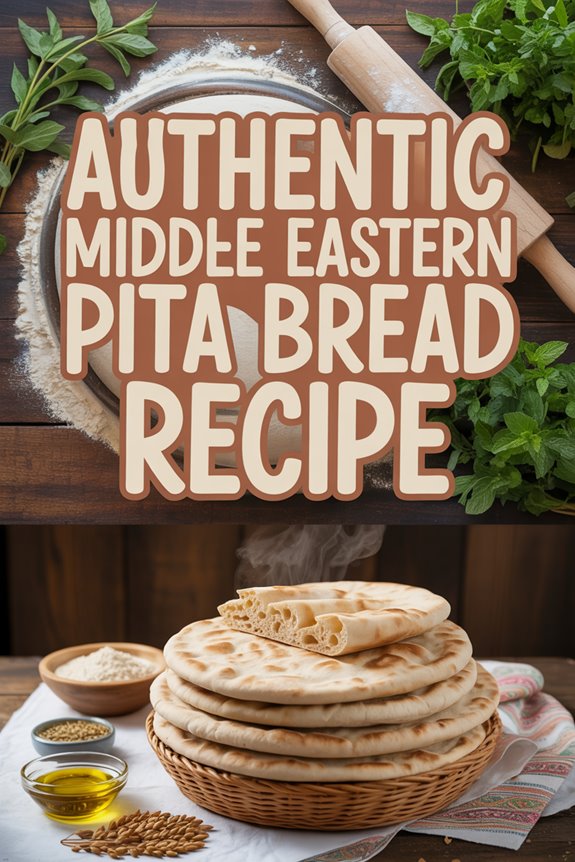
Authentic Middle Eastern Pita Bread Recipe
Perfect, pillowy-soft pita bread with authentic pockets awaits your kitchen, but the ancient secret to its magical puff remains...
Why You’ll Love this Middle Eastern Pita Bread
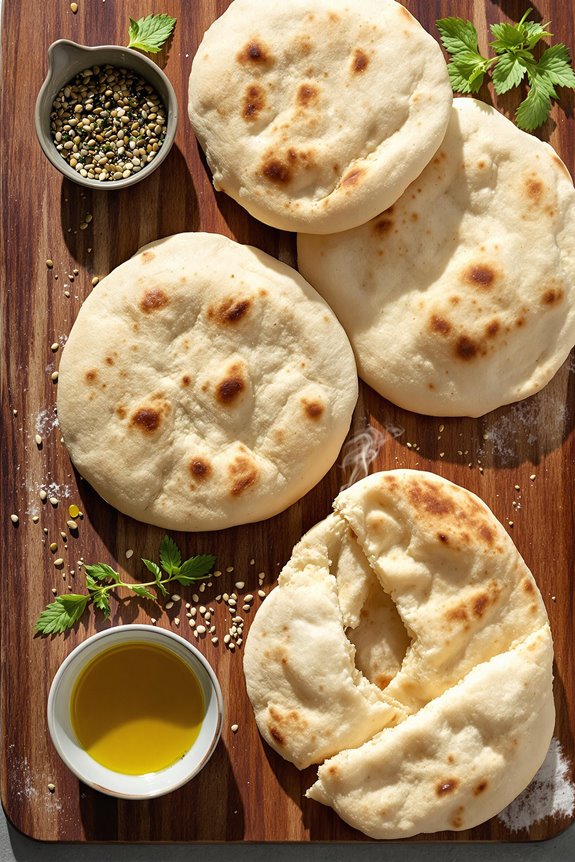
If you’ve ever bitten into a perfectly puffed, warm pita bread with its distinctive pocket just waiting to be filled, you’ll understand why this recipe is absolutely worth making at home.
You may be interested
Sizzling Authentic Mexican Beef Taco Recipe
May 3, 2026

I’m convinced nothing compares to the satisfaction of watching these simple rounds of dough balloon dramatically in your oven, creating that magical hollow center.
What I adore about this recipe is its authentic simplicity—just yeast, flour, water, sugar, and olive oil transform into something extraordinary.
The texture is incomparable: pillowy-soft inside with a slight chew, yet sturdy enough to cradle your favorite fillings without tearing.
Recommended Products

PERFECT FOR BEGINNER: Whether you're just starting your baking journey or looking for an easy way to enjoy fresh bread at home, this automatic bread maker has you covered. Simply add the ingredients, select a menu, and let it do the rest-from kneading to baking. No experience needed, just effortless homemade bread every time


FOOLPROOF FRESH BREAD AT HOME: Automatic kneading, rising, and baking delivers bakery-quality bread with just one touch — perfect for beginners.
What Ingredients are in Middle Eastern Pita Bread?
Authentic Middle Eastern pita bread is a marvel of simplicity, relying on just a handful of basic pantry ingredients to create that signature pocket bread we all know and love. The magic happens during baking when the dough puffs up dramatically, creating that hollow center that’s perfect for stuffing with your favorite fillings.
While the ingredient list might seem basic, each component plays a vital role in developing the proper texture and flavor.
- 1 (4 ounce) package dried yeast
- 1 teaspoon sugar
- 3½ cups plain flour
- 2 tablespoons olive oil
- 1½ cups lukewarm water
When selecting your ingredients, the quality matters more than you might think. For the flour, a standard all-purpose variety works perfectly, but if you want to experiment, you could substitute up to a cup with whole wheat flour for a nuttier flavor and added nutrition.
The water temperature is critical—too hot and you’ll kill the yeast; too cold and it won’t activate properly. I aim for water that feels comfortable to the touch, around 105-110°F, which creates the ideal environment for those yeast cells to wake up and get to work.
And while many traditional recipes might use vegetable oil, the olive oil here adds a subtle Mediterranean flavor that really elevates these pitas above store-bought versions.
Recommended Products

Made in Canada

Made in Canada

90 Calories per serving
How to Make this Middle Eastern Pita Bread
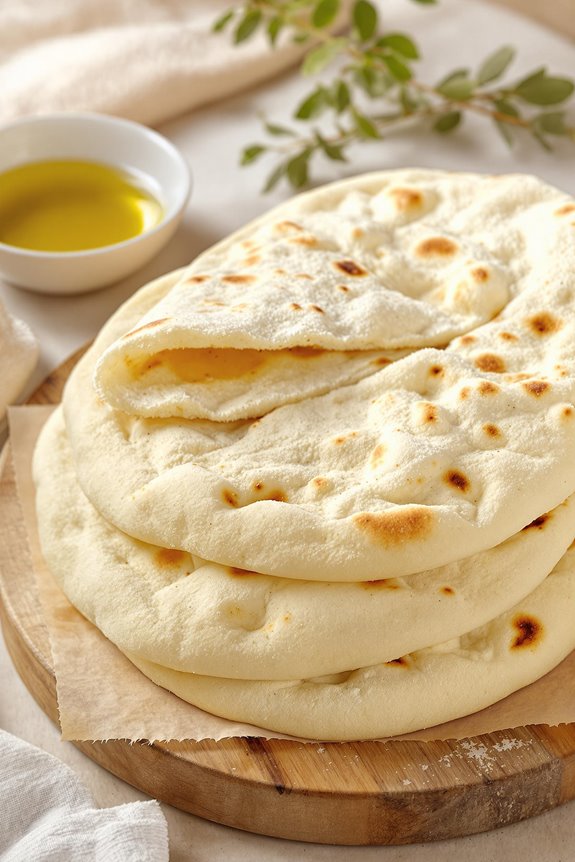
To start this authentic pita bread journey, you’ll need to activate your 4-ounce package of dried yeast by combining it with 1 teaspoon of sugar and 1½ cups of lukewarm water in a bowl. Give it a gentle stir until everything dissolves, then place it somewhere cozy and warm for about 10 minutes.
You’re looking for that magical moment when bubbles appear on the surface and the mixture turns frothy and expands slightly. Trust me, if your yeast doesn’t foam up, it’s probably gone to yeast heaven, and you’ll need to start fresh.
Once your yeast mixture is happily bubbling away, it’s time to combine it with 3½ cups of plain flour and 2 tablespoons of olive oil. You can use a food processor for about 30 seconds until the mixture forms a ball, or go old-school and mix everything in a bowl with a wooden spoon or your hands.
After forming a smooth dough, turn it onto a well-floured surface and knead until it feels elastic and silky under your fingers. Place this dough baby in a well-oiled bowl, cover it with plastic wrap and a tea towel, and let it rest in a warm spot for about 20 minutes until it’s nearly doubled in size.
The waiting is the hardest part, but so worth it for that perfect pita texture. After punching down the dough (quite therapeutic, really), divide it and shape into 2-inch thick rounds, brush with water, and let rise for another 20 minutes before baking in a scorching hot 500°F oven for just 4-5 minutes.
The result? Soft, pale, slightly puffy pitas with that signature hollow center that’s perfect for stuffing with all your favorite fillings. For the most consistent baking results, consider using a high-end Dutch oven which distributes heat evenly and retains the perfect temperature throughout the cooking process.
Recommended Products
![One in a Mill Instant Dry Yeast | 1.1 LB (Pack Of 1) [IMPROVED] Fast Acting Self Rising Yeast for Baking Bread, Cake, Pizza Dough Crust | Kosher | Quick Rapid Rise Leavening Agent for Pastries](https://m.media-amazon.com/images/I/410rlbBZAvL._SL500_.jpg)
A YEAST THAT WILL RISE TO THE OCCASION: Enjoy baking your favorite breads, doughs, bagels, cakes, and croissants in just half the time! Our rapid rise yeast is carefully milled into the finest granules, enabling it to be easily mixed right into the ingredients without the needing for pre-hydration.

Mediterranean Balady White Pita Bread 10" 525g, 4 bags, 6 bread each

PRODUCT SIZE: Large white pita bread pockets, pack of 9 pieces weighing 24 ounces (681g) total
Middle Eastern Pita Bread Substitutions and Variations
While traditional Middle Eastern pita bread follows the recipe I’ve shared above, there’s plenty of room for delicious experimentation when making these pillowy pockets at home.
Try substituting up to half the all-purpose flour with whole wheat for a nuttier flavor and additional fiber. You can also incorporate herbs like za’atar, rosemary, or garlic powder directly into the dough—about 1 tablespoon per batch creates aromatic pitas with built-in seasoning.
For a tangier version, replace half the lukewarm water with plain yogurt. This creates a slightly denser texture but adds wonderful complexity to the flavor profile.
The possibilities are endless!
Recommended Products

Pita Bread - White 9" loaves
Mediterranean Balady White Pita Bread 10" 525g, 2 bags, 6 bread each

Pita Bread White - 12 loaves
What to Serve with Middle Eastern Pita Bread
Freshly baked pita bread deserves companions that highlight its soft, pillowy texture and subtle flavor.
I love pairing my homemade pitas with classic hummus—creamy chickpeas blended with tahini, lemon juice, and garlic—creating the perfect vehicle for that warm pocket.
Baba ganoush, with its smoky eggplant depth, offers a delightful contrast to the bread’s simplicity.
For a complete spread, I’ll add tabbouleh (that bright parsley-bulgur salad), yogurt-cucumber tzatziki, and falafel.
Sometimes, I’ll stuff the pitas with shawarma-spiced chicken or lamb.
The possibilities are endless—though I’ve learned the hard way that overstuffing leads to inevitable lap disasters!
Recommended Products

2-PACK HUMMUS BOWL SET – Includes two matching 6.5-inch melamine serving bowls for hummus, guacamole, labneh, baba ganoush, olives, sauces and dips.
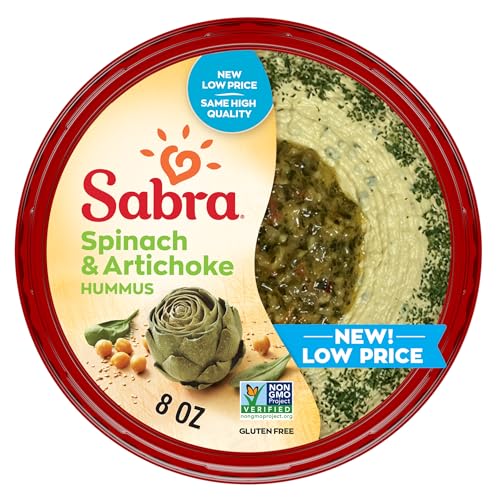
Spinach & Artichoke Hummus Dip: Why rush into dinnertime when you can enjoy some “dipping into delicious” time? Like scooping up a big bite of Sabra Spinach & Artichoke Hummus. 8 oz.

JALAPENO LIME HUMMUS: Our chefs have been busy in the kitchen pursuing the boundaries of flavor and bring spice fans their newest innovation. A touch of heat, a hint of lime, and loads of bold, fresh flavor makes this our best tub yet.
Final Thoughts
After spending time with this authentic pita recipe, I’m convinced there’s something almost magical about the moment when these humble circles of dough puff up in the oven, creating those perfect little pockets.
What I love most about pita bread is its versatility—it’s the unsung hero of so many meals, from breakfast to dinner.
The simple combination of flour, yeast, water, and a touch of olive oil transforms into something extraordinary with just a little patience and technique.