Links below are affiliate links. We earn a commission on purchases at no extra cost to you.
Cloud-Soft Homemade Flatbread Recipe: Our Family Legacy
Learn our family's treasured flatbread technique for irresistibly fluffy, pillowy breads that will transform your everyday meals.

Why You’ll Love these Pillowy Flatbreads
Once you’ve tasted these homemade flatbreads, you’ll wonder why you ever bothered with store-bought versions.
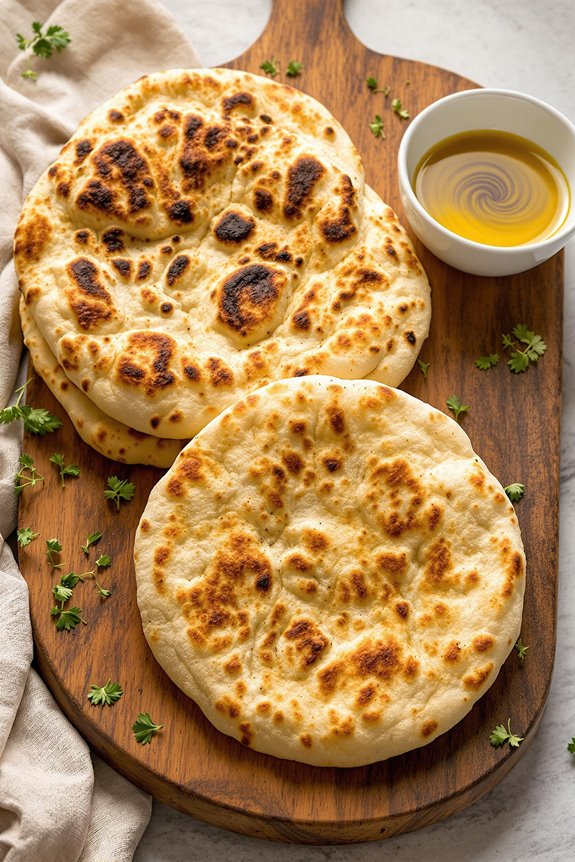
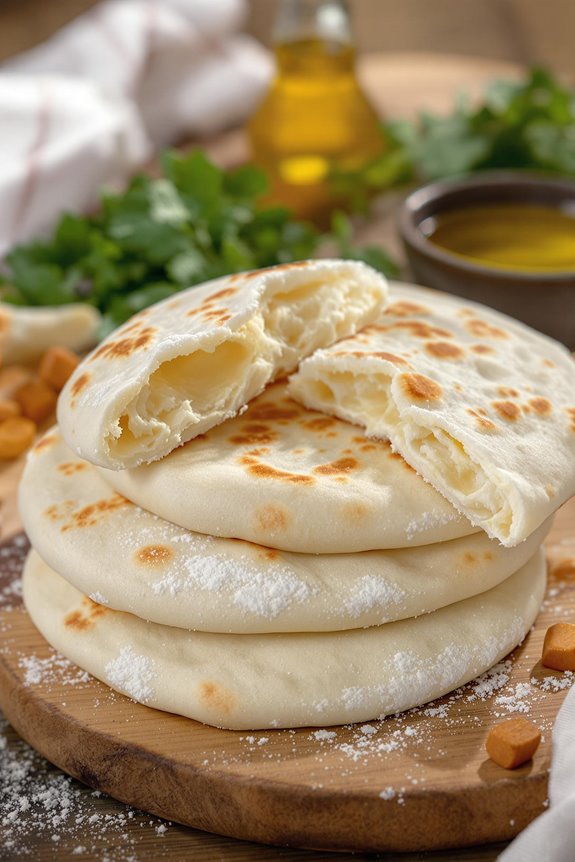
The magic happens when that thin dough hits the hot pan, transforming into a gloriously puffy, tender bread with just the right amount of chew and crispness around the edges.
I’m obsessed with how versatile these flatbreads are—perfect for scooping up curries, wrapping around falafel, or simply tearing and dipping into olive oil while still warm.
The combination of milk and water in the dough creates that cloud-soft interior that simply can’t be replicated commercially.
Recommended Products

Authentic San Francisco Sourdough Culture: this starter brings the distinct tangy flavor of traditional West Coast sourdough straight to your kitchen.
What Ingredients are in Pillowy Flatbreads?
These homemade flatbreads require just a handful of pantry staples to create absolute magic in your kitchen.
The beauty of flatbread is its simplicity—with basic ingredients, you can create something that tastes far more complex than the sum of its parts. The combination of milk and water creates that perfect tender texture, while the yeast gives the dough its vital lift and flavor development.
- 200 ml milk
- 200 ml lukewarm water
- 1 packet (7g) dried yeast
- 500g strong bread flour
- 25g salt
- 25g softened butter, cut into cubes
- Oil for greasing
When shopping for these ingredients, quality matters in subtle ways. Look for strong bread flour (sometimes called bread flour or high-protein flour) rather than all-purpose if possible—it contains more gluten, which gives your flatbreads that delightful chew.
The temperature of your water is essential too; it should be lukewarm, not hot, or you risk killing the yeast.
And while the recipe calls for butter, you could substitute a good olive oil if you prefer a different flavor profile or need a dairy-free option.
The flatbreads freeze beautifully, so don’t hesitate to make the full batch even if you’re cooking for one or two.
Recommended Products


The higher the protein, the higher the potential rise. Our organic unbleached flour is a full point higher in protein than other national brands, so you can depend on it for consistent performance and lofty, beautiful yeasted breads

LAB-TESTED GLYPHOSATE & PESTICIDE FREE: Protect your family with a truly clean-label wheat flour. Independently lab-tested to verify it is free from glyphosate and harsh pesticides. Pure, safe, and trusted by health-conscious home bakers.
How to Make these Pillowy Flatbreads
Start by creating your yeast mixture. Combine 200 ml milk with 200 ml lukewarm water in a jug, then sprinkle in your packet of dried yeast (7g) and give it a good whisk. Let this mixture sit in a warm spot for a few minutes—you want the yeast to wake up and get working.
Meanwhile, in a large bowl, mix together 500g of strong bread flour and 25g of salt. Add 25g of softened, cubed butter and use your fingertips to rub it into the flour until it resembles fine breadcrumbs. Make a well in the center and gradually pour in your yeast mixture, stirring as you go, until you form a cohesive dough. The texture should be just right—not too sticky, not too dry. If needed, adjust with a touch more flour or water.
Now comes the fun part—kneading! Turn your dough onto a lightly floured surface and knead for about five minutes until it becomes shiny and elastic. There’s something so therapeutic about feeling the dough transform under your hands, isn’t there?
Once kneaded, rinse your bowl with hot water (this creates a nice warm environment), shape the dough into a neat ball, place it in the bowl, and cover with oiled cling film. Leave it somewhere warm until it doubles in size, which might take up to two hours. Your patience will be rewarded when you see that beautifully risen, airy dough just begging to be made into flatbreads.
When the dough has doubled, gently punch it down and knead for another minute or so. Then tear off pieces of dough and start flattening them—first with your hands and then with a rolling pin to get them nice and thin. This thinness is essential; if they’re too thick, you’ll end up with doughy lumps rather than light, airy flatbreads.
Heat a heavy-based frying pan, place your flatbread in, and then turn down the heat. Let it crisp up on one side before flipping to cook the other side. The flatbreads will puff up beautifully as they cook. For professional-quality results with less effort, a premium stand mixer can make the kneading process much more efficient and consistent. Serve them immediately while they’re still warm and at their absolute best. The contrast between the crispy exterior and soft interior is what makes these homemade flatbreads truly special.
Recommended Products

Reinvented Danish Dough Whisk: A modern upgrade to the traditional Danish dough whisk. The KneadAce Dough Wand mixes sourdough and bread dough quickly while reducing sticking. The open rib design moves dough smoothly without trapping it like wire whisks.

Upgraded 4-Loop Mixing: Replaces dough hook, mixing spoon, dough stick and small bread & dough mixer; works as manual bread whisk and sourdough whisk for thick batter and dough; handles sourdough starter, pizza dough and pancake mixes

Pillowy Flatbreads Substitutions and Variations
While mastering the basic flatbread recipe gives you a fantastic foundation, I’m all about customizing recipes to fit what’s in your pantry or dietary needs.
You can easily swap the dairy milk for almond, oat, or coconut milk for a vegan version—just adjust the liquid slightly if needed. For gluten-free options, try a 1:1 gluten-free flour blend, though you might need to add a bit more liquid for proper hydration.
My favorite variations include folding herbs like rosemary or thyme into the dough, or sprinkling the flatbreads with za’atar or everything bagel seasoning right before cooking. Delicious!
Recommended Products

Versatile Baking: Perfect 1:1 substitute for wheat flour in non-yeasted recipes, ideal for gluten-free cookies, cakes, muffins, and pancakes. Simplify your gluten-free baking with this all-purpose flour alternative.

Versatile Replacement: This gluten free flour 1 to 1 substitute for wheat flour can be used in yeasted recipes, allowing you to create delicious GF versions of artisan boules, bagels, cinnamon rolls, and burger buns with ease.

King Arthur Gluten Free Flour is ideal for all gluten-free recipes, our carefully tested blend of white rice flour, whole grain brown rice flours, tapioca starch, and potato starch yields baked goods with no grittiness or aftertaste
What to Serve with Pillowy Flatbreads
Once you’ve made a batch of these irresistibly soft flatbreads, you’ll need some equally delicious accompaniments to showcase their versatility.
I love pairing them with creamy hummus, drizzled with olive oil and a sprinkle of za’atar, or serving alongside a fragrant lamb curry where they’re perfect for scooping up rich sauce.
For breakfast, try wrapping them around scrambled eggs with avocado, or go sweet with a spread of ricotta and honey.
They’re also magnificent torn into pieces and dipped into tzatziki or baba ganoush.
The possibilities are endless—whatever you choose, these flatbreads provide the perfect pillowy canvas.
Recommended Products

Mediterranean-inspired with briny olives and nutty olive oil, topped with green and black olives

OLIVE OIL SEA SALT HUMMUS: A new option for hummus lovers who also enjoy olive oil’s smooth, rich finish. It’s a simple, creamy blend that lets olive oil shine, finished with a bright touch of sea salt. A fresh addition alongside our original lineup — made for whatever you’re craving.

Olive Tapenade Hummus Dip: Bring everyone together over this tasty snack featuring Kalamata and green olives with our classic hummus. Because there’s nothing like full mouths to get your family talking. 8 oz.
Final Thoughts
After mastering this flatbread recipe, you’ll never look at store-bought versions the same way again.
There’s something magical about watching that simple mixture of milk, water, flour and yeast transform into pillowy, warm discs of bread right before your eyes.
I’m convinced that the secret lies in that final rolling—getting them paper-thin guarantees they’ll puff beautifully without becoming doughy lumps.
The satisfaction of seeing them crisp up in that hot pan, bubbling and browning in spots, is one of cooking’s simple pleasures.