Links below are affiliate links. We earn a commission on purchases at no extra cost to you.
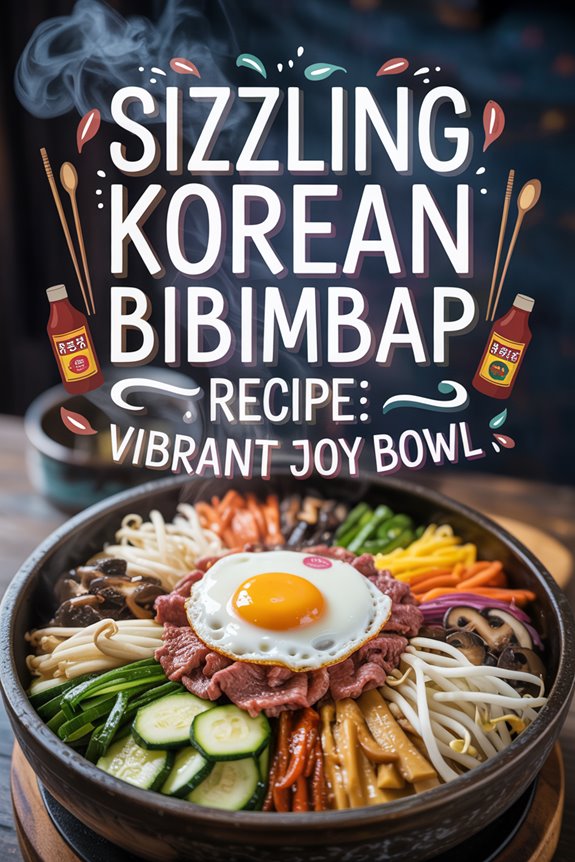
Sizzling Korean Bibimbap Recipe: Vibrant Joy Bowl
Discover how this sizzling Korean bibimbap recipe transforms humble ingredients into a vibrant joy bowl that will revolutionize your weeknight meals.
Why You’ll Love this Sizzling Korean Bibimbap
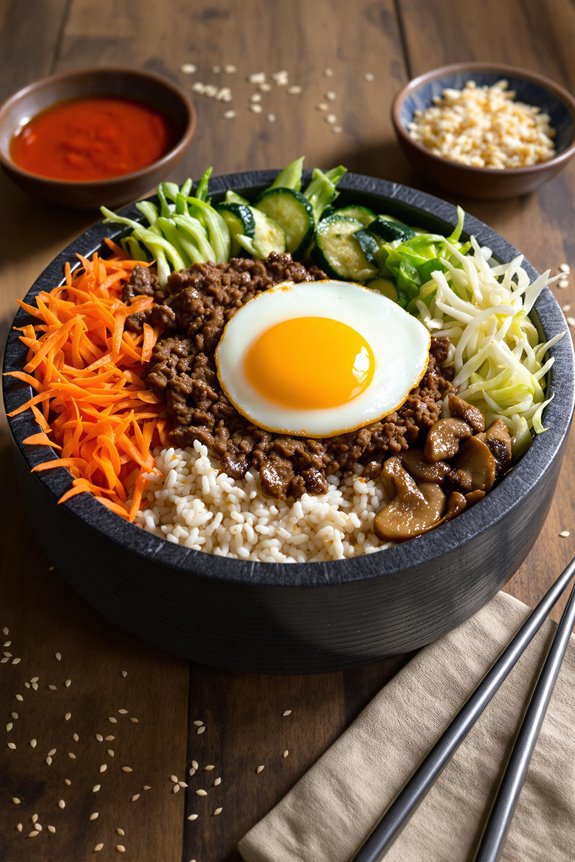
If you’ve never experienced the delightful symphony of flavors that’s bibimbap, you’re in for a real treat! This colorful Korean classic combines tender beef, crisp vegetables, and a runny egg yolk that, when stirred together, creates pure magic in your mouth.
I’m obsessed with how the savory soy-marinated beef plays against the earthy mushrooms and the slight crunch of bean sprouts.
The beauty of bibimbap lies in its perfect balance—spicy gochujang paste, nutty sesame oil, and that moment when you break the golden yolk and watch it cascade over everything.
Dinner doesn’t get more satisfying than this!
What Ingredients are in Sizzling Korean Bibimbap?
Bibimbap, which translates to “mixed rice,” is a beautiful medley of flavors and textures that creates a complete meal in one bowl. The ingredient list might look long, but don’t be intimidated—many items are pantry staples, and the fresh components can be prepped while the rice cooks. What makes bibimbap special is how each ingredient maintains its distinct flavor while still harmonizing with everything else when mixed together.
- 1 cup short-grain rice
- 1/2 pound lean ground beef
- 2 tablespoons soy sauce
- 3 tablespoons sesame oil (divided)
- 2 teaspoons sugar
- 1 garlic clove, minced
- 1/2 teaspoon grated ginger
- 1/2 cup apple juice
- 2 eggs
- 1/2 zucchini, thinly sliced
- 1 cup mushrooms, thinly sliced
- 1/2 cup bean sprouts
- 1/2 cup carrots, julienned
- 1/4 cup Korean chili paste (gochujang)
- 2 tablespoons rice wine vinegar
When shopping for these ingredients, the Korean chili paste (gochujang) might be the trickiest to find, but it’s worth seeking out at Asian markets or even larger supermarkets with international sections. It’s what gives bibimbap its signature spicy-sweet kick that can’t be substituted. For the vegetables, feel free to work with what’s in season—spinach, cucumber, or radish can be wonderful additions. And while ground beef is traditional in this recipe, you could swap in thinly sliced beef, chicken, or even tofu for a vegetarian version without losing the essence of this beloved Korean dish.
How to Make this Sizzling Korean Bibimbap
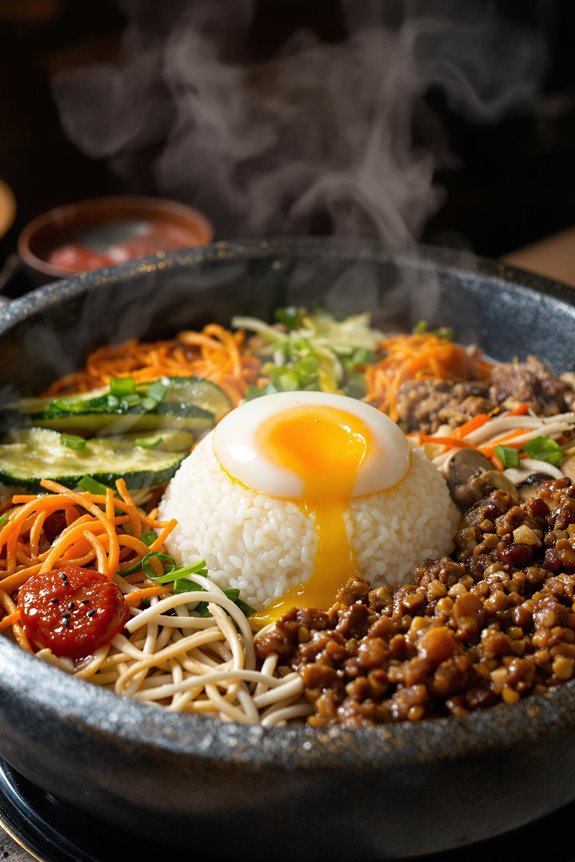
Creating this colorful, flavorful bibimbap is all about preparing each component perfectly and then bringing them together in one beautiful bowl. Start by making the marinade for your 1/2 pound of ground beef—simply stir together 2 tablespoons soy sauce, 1 tablespoon sesame oil, 2 teaspoons sugar, 1 minced garlic clove, 1/2 teaspoon grated ginger, and 1/2 cup apple juice in a bowl. Mix in the beef and let those flavors mingle while you prepare the other ingredients.
Next, cook 1 cup of short-grain rice according to package directions—this will form the foundation of your bibimbap. For perfect, fluffy rice every time, consider using a premium rice cooker that will deliver consistent results. While the rice cooks, it’s time to prepare your vegetables. In a skillet, heat 1/2 tablespoon of sesame oil and sauté 1/2 zucchini (thinly sliced) until tender, about 5 minutes. Set those aside and use the same skillet with another 1/2 tablespoon of oil to cook 1 cup of thinly sliced mushrooms.
Want to know my favorite part? The quick-blanched 1/2 cup of bean sprouts—just a minute in boiling water gives them the perfect tender-crisp texture. Cook your marinated beef until fully browned, and then fry 2 eggs in the remaining tablespoon of sesame oil, keeping those yolks deliciously runny.
Assembly is where the magic happens. Mound that steaming rice in the center of your bowl, then artfully arrange the zucchini, mushrooms, bean sprouts, and 1/2 cup julienned carrots around the outside. Sprinkle the savory beef over the vegetables and crown it all with your perfectly fried egg.
Serve with 1/4 cup Korean chili paste and 2 tablespoons rice wine vinegar on the side—these condiments add that signature tangy heat that makes bibimbap so irresistible. When you’re ready to dig in, break that golden yolk and mix everything together. The warmth of the rice and beef will slightly cook the egg, creating a silky sauce that coats every bite. Divine, isn’t it?
Sizzling Korean Bibimbap Substitutions and Variations
While traditional bibimbap follows specific ingredients and techniques, you’ll be delighted to know that this versatile Korean dish welcomes creative adaptations to suit your dietary needs or pantry limitations.
You can swap ground beef for chicken, tofu, or tempeh for a vegetarian version. Don’t have short-grain rice? Brown rice or even quinoa works beautifully. For a low-carb option, cauliflower rice makes a surprisingly satisfying base.
Missing zucchini? Try cucumber or spinach instead. The chili paste (gochujang) is essential for authentic flavor, but in a pinch, sriracha mixed with a touch of miso can approximate that sweet-spicy punch that makes bibimbap so irresistibly craveable.
What to Serve with Sizzling Korean Bibimbap
When serving your sizzling Korean bibimbap, you’ll want to contemplate accompaniments that complement its vibrant flavors and create a complete Korean dining experience.
I’m passionate about pairing this colorful dish with traditional sides like kimchi—that perfectly fermented cabbage with its tangy, spicy punch—and some light, invigorating cucumber namul.
Don’t forget a small bowl of doenjang jjigae (soybean paste stew) for that umami warmth!
A chilled barley tea (boricha) provides the ideal beverage companion, cutting through the richness while cleansing your palate between those delicious, mixed bites of rice and veggies.
Final Thoughts
As I’ve shared this beloved Korean classic with you, I’m reminded that bibimbap isn’t just a meal; it’s a celebration of harmony through contrast.
The crispy rice, runny egg yolk, tender vegetables, and savory beef create a symphony of textures that somehow makes perfect sense when stirred together.
I’m always amazed at how something so visually stunning transforms into delicious comfort food with just a few swirls of chopsticks.
The beauty of bibimbap lies in its adaptability—use whatever vegetables you have on hand and adjust the spice level to suit your taste.
It’s organized chaos in the best possible way!